
 The Digital Monroe Doctrine: rebranding copyright infringement as a military asset
  Transformative Justice in the Syrian Transition
  Strategic Pragmatism: A New Approach to European Engagement in Africa
  Special Issue “Role of AI and Automated Decision-Making Systems in Asylum and Migration”
 Human Rights Working Group
Throughout this term, the members of the Human Rights WG are committed to reinforce the advocacy role that characterises the EST as an organisation. Given the intersectional nature of our topic, we are willing to boost our capacity to act as the connection between all the EST WGs. We strongly believe in the importance of analysing the reality of European affairs through a human rights perspective, combining our legal and political knowledge. However, human rights are found at the crossroads of multiple topics such as reproductive health, forced mobility dynamics or institutional racism, to name a few. In this regard, we advocate for the added value of joining efforts with the rest of WGs, each of us bringing our own perspectives for a more comprehensive research. We are equally conscious about the fact that our articles and policy briefs might contain complex vocabulary and concepts, making their access more difficult to a wider audience. This is the reason why our aim is to complement our research with other materials, particularly through the creation of infographics and the participation in podcast episodes. Finally, as a way to reach a wider audience and create a deeper sense of community, we will promote the organisation of events in collaboration with other EST departments.
Tina Pirnovar – Head of the Working Group

Tina Pirnovar is a Slovenian lawyer and researcher in international public law at the University of Ljubljana, Faculty of law. Her experience spans judicial service at the Ljubljana District Court (criminal division) and the Constitutional Court of Slovenia, private practice at Wolf Theiss, and civil‑society work with Transparency International Slovenia.
Her research examines sanctions, SLAPPs and access to justice, and addresses contemporary questions in international humanitarian law, human rights law, refugee law and environmental law. She organises expert events and conferences and combines rigorous comparative research with courtroom experience to produce policy‑relevant analyses that strengthen European and international human rights protection.
Daniele Sorato – Editor

Daniele is based in Brussels and has recently finished his Master’s degree in International Relations at the University of Bologna, while also holding a Bachelor’s Degree in International Studies and European Institutions from the University of Milan.
He speaks Italian, English, Spanish, and German, to go along with some lackluster effort in adding new languages. He joined the EST in 2024 because of his interest in human rights, international politics, and editing.
Clément Levrat

Clément is a Swiss and French student pursuing a Master’s Degree in European Studies at the Institute for European Studies in Brussels. He graduated from McGill University in 2025, where he had a double Major in Political Science and International Development.
He is particularly interested in EU migration policies and Human Rights across the EU. After his Master’s, he would like to work for NGOs or CSOs advocating for Human Rights.
Morena Haxhiraj
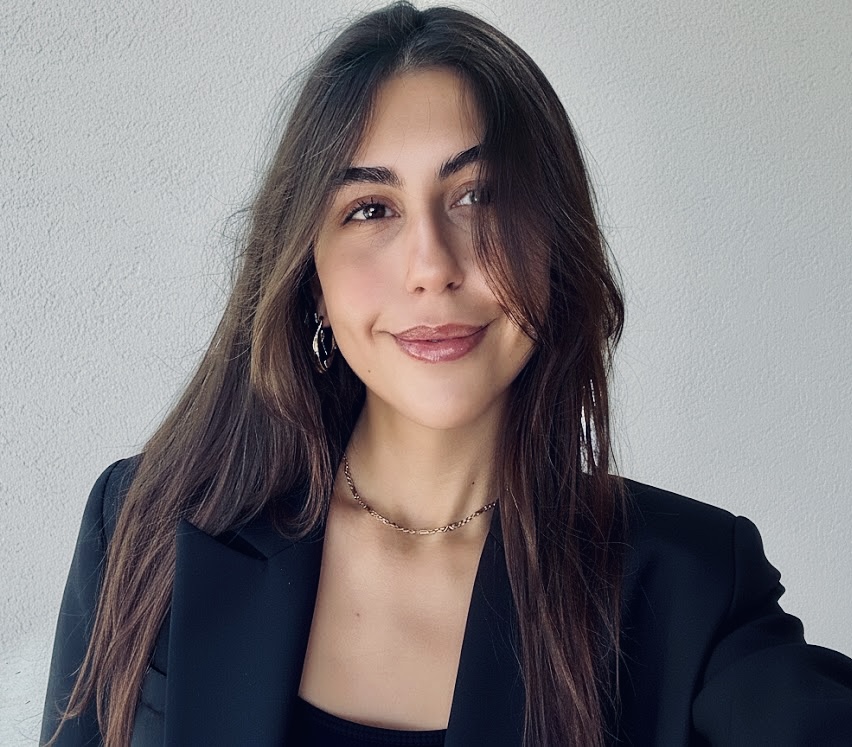
Morena is a recent graduate of the Department of Political Science and Public Administration at the National and Kapodistrian University of Athens. Originally from Greece, she has cultivated a strong academic focus on human rights, international law, and international relations. Her undergraduate thesis examined the protection of human rights at sea, exploring the legal and institutional responsibilities of states in maritime contexts.
Alongside her academic work, she has been actively engaged in volunteer initiatives, reflecting her commitment to social justice and community engagement. Morena is particularly interested in the intersection of law and policy in safeguarding fundamental freedoms and aims to contribute to research and advocacy in the field of international human rights.
Agnese Brocchini
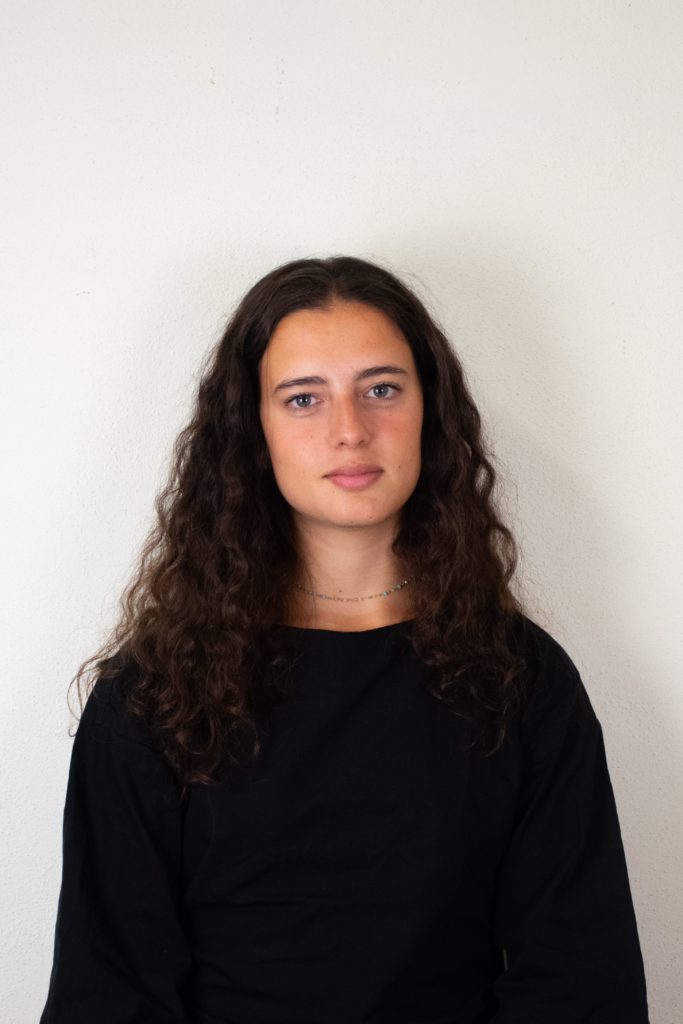
Agnese is a third-year student at the Joint BA in European Studies at KU Leuven, where, after pursuing a major in European Public Law, she is now undertaking a minor in Ethics and Political Philosophy. Her main interests lie at the intersection of human rights and migration, a focus she further developed through volunteering in Greece.
A significant part of her studies lies in the opportunity to live and experience diverse cultural settings including Spain, Italy, Belgium and the US.
Beatrice-Ana-Maria Matei

Beatrice holds a Bachelor’s degree in European Studies and a Master’s degree in Cultural Studies. She participated in the Young Diplomats Academy’s Digital Diplomacy program, exploring AI’s impact on international human rights and taking part in simulated diplomatic negotiations. Through an Erasmus+ scholarship, she studied Political Science at the University of Gdańsk, Poland, and completed internships at the Romanian Parliament within the Directorate for Relations with International Organizations and the European Union.
Her commitment to social justice is reflected in her work at the Human Rights Committee of the Romanian Chamber of Deputies, where she conducted policy research, analyzed legislation, and collaborated with civil society. She is now a fully-funded PhD candidate researching how social hierarchies structurally favor certain identities while marginalizing others, shaping access to recognition, opportunity, and human rights.
Paula Villa Font

Paula Villa holds a Bachelor’s degree in Political Science and Public Administration from the University of Barcelona and a Master’s degree in International Affairs from Blanquerna – Ramon Llull University. Her work focuses on human rights, international governance, and political communication, with particular interest in how institutional narratives and media framing shape policy debates and influence democratic processes.
She completed her internship at NOVACT – International Institute for Nonviolent Action, where she supported research, advocacy initiatives, and project coordination related to corporate accountability and human rights in conflict-affected contexts.
Maria Francisca Ricardo Da Costa

Originally from Lisbon, Portugal, Francisca is a third year Politics & Government student at Sciences Po. She is currently on exchange at the University of Toronto. She previously graduated from the United World College in Costa Rica. Her academic interests include Human Rights, International Security, Euro-Mediterranean relations and Migration Affairs.
Her experience includes internships at the Portuguese Refugee Council, the EuroMediterranean Human Rights Network, and the Geneva International Centre for Justice. She speaks Portuguese, English, Spanish and French, and is currently studying Arabic.
Antoni Łukasik – Researcher

Antoni Łukasik is a PhD Researcher at the Interdisciplinary Doctoral School at the University of Warsaw, where his work lies at the intersection of Political science and the Philosophy. His dissertation focuses on socio-political narratives, public discourse, and inter-paradigmatic communication in geopolitical contexts.
He graduated from the Warsaw School of Economics with a degree in Global Governance and Finance, and from the University of Warsaw in Philosophy. He also studied at the University of Crete in Rethymno (Greece), within the Department of Social Sciences.
He is academically involved as a Policy Research Fellow at Collegio Futuro Heidelberg University and is currently conducting a research visit at the Department of Political Science at National Taiwan University (NTU).
Alongside his academic work, he is actively engaged as an Associate Member of the Taiwan Foreign Correspondents’ Club. Professionally, he serves as Consultant to Poland’s Ministry of Digitalisation. Previously, he worked in project management and international cooperation within the Chancellery of the Prime Minister of Poland.
Edith Bosch Jordan – Researcher

Edith Bosch Jordan is an early-career human rights and gender equality researcher specialising in anti-gender movements, far-right networks, and democratic backsliding in Europe, currently completing a Bachelor’s in International Relations at Ramon Llull University. Her work is grounded in the understanding that women’s rights are human rights and that the erosion of one is inseparable from the erosion of the other.
Her experience spans the UNPO, The Advocates for Human Rights, and Blanquerna’s DIGILAB Research Group, among others, where she has conducted legal and policy analysis, authored research on violence against women, and investigated far-right disinformation narratives. She has moderated panels on the far right in Catalonia and serves as an EU Careers Ambassador at her university. She sees the current backlash against women’s rights as a direct attack on the democratic framework the EU was built to protect, and she is eager to deepen this work within the EST’s human rights agenda.