 Transformative Justice in the Syrian Transition
  Strategic Pragmatism: A New Approach to European Engagement in Africa
  Special Issue “Role of AI and Automated Decision-Making Systems in Asylum and Migration”
  De Jure Compliance, De Facto Resistance: The Persistence of Elite Power and Institutional Reform in EU Candidate States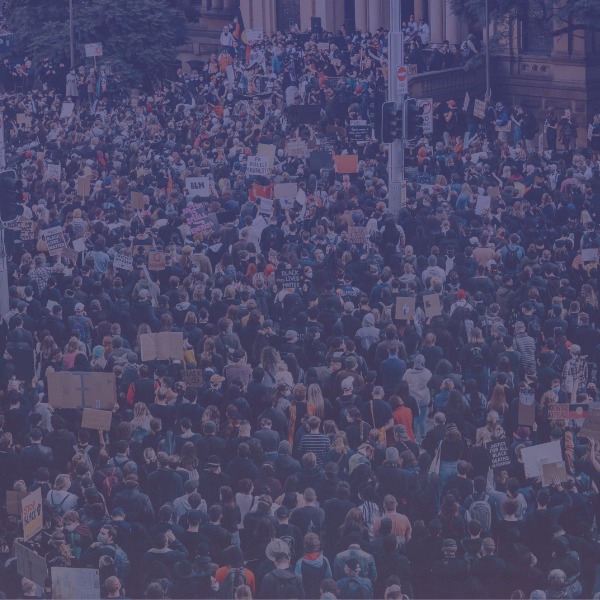
Written by Virginia Bima, Belgium Ambassador
Edited by Marina Pastor Garcia, Universitat Autònoma de Barcelona
Abstract
Recent protests in Brussels, from farmers’ mobilisations to national strikes, have renewed attention on how dissent is managed at the political heart of the European Union. Looking at Brussels as both a physical city and a symbolic centre of EU power, this article examines how demonstrations are managed in the city, how public space functions as the arena where legitimacy and authority are tested, and how this dynamic generates a subtle but persistent form of democratic friction. Drawing on media reporting, research and human rights assessments, it shows that demonstrations are often allowed and supported up to a point, before being recast as security concerns when they grow larger or more unpredictable. This shift, which is rarely announced as a policy change and usually framed in technical terms, has tangible effects: it prioritises risk management over participation and gradually reshapes how dissent is experienced.
Rather than describing a simple story of repression, this review highlights a form of democratic friction produced by the gradual expansion of control, discretionary policing and security responses shaped by repeated crises. In Brussels, where political power is highly concentrated and symbolically charged, these dynamics become especially visible. What emerges is a broader problematic facing European democracies, one that existing debates on protest policing have only partially addressed: when does protest count as democratic participation, and when does it become something to be contained?
Keywords
Protest policing; Public space; Democratic legitimacy; Brussels; Governance of dissent
Brussels, under tractors
In the morning of 18 December, hundreds of tractors entered Brussels, the institutional capital of the European Union.
Farmers protesting the long-negotiated EU–Mercosur free trade agreement converged on the city from across Belgium and many other European countries (FRANCE 24 English, 2025; People’s Daily Online, 2025). They started to arrive overnight, in advance of a European Council summit where the fate of the pact was being debated. The agreement, which would gradually reduce tariffs on goods traded between the EU and Mercosur states, has drawn sustained opposition from agricultural sectors across the bloc. (Reuters, 2025; Al Jazeera, 2025).
Major roads were blocked as protesters gathered near the Europa Building and other EU institutions. According to Reuters (2025), the Brussels local police had authorised a demonstration involving up to 50 tractors, but by early afternoon around 1,000 vehicles and an estimated 7,000 people had entered the capital. In several locations, farmers hurled potatoes, eggs and fireworks at the police, who responded with tear gas and water cannons after clashes and incidents of vandalism (The Brussels Times, 2025).
The protest in Brussels is one included in the recent wave of contestation across the European Union: similar demonstrations have taken place in France, Poland and elsewhere as part of an ongoing outbreak of agricultural mobilisations against trade deals and regulatory pressures on farming livelihoods (Al Jazeera, 2025; People’s Daily Online, 2025).
From incident to pattern
Taken on its own, the farmers’ mobilisation could be understood as a sectoral protest and an isolated incident in Brussels. In the bigger picture, however, it is encompassed in a sequence of large-scale demonstrations that have taken place in the European capital over the past year. Despite these mobilisations differing in their causes and participants, they show recurring similarities regarding how they are handled once they reach the city’s most politically visible spaces.
In recent months, national strikes and issue-driven protests have taken place in Brussels, many of them initially authorised and presented as legitimate forms of collective expression. Several demonstrations illustrate a repeated dynamic. During the national strike of 14 October 2025, police deployed tear gas and water cannons after clashes and incidents of vandalism. Similar tensions emerged during demonstrations in support of the Global Sumud flotilla in October 2025, when thousands gathered near the Belgian Ministry of Foreign Affairs and the European Parliament, leading to confrontations between protesters and police (OCCRP, 2025; The Brussels Times, 2025). Reporting on the national strike, Politico described the use of crowd-control measures alongside arrests and injuries, even as some demonstrators stated they had been marching peacefully before the escalation (Jochecová & Knapp, 2025).
Rather than pointing to an isolated clash, these episodes suggest a consistent pattern that is rarely explicit, but embedded in shared assumptions about public order, risk and control. In practice, however, expectations about their size, route and acceptable level of disruption are defined in advance through permit procedures, negotiations with organisers and police risk assessments. When demonstrations exceed these anticipated parameters, concentrate around politically sensitive locations or bring together heterogeneous actors, they tend to be reinterpreted through a security lens. These thresholds suggest that escalation is less an anomaly than a patterned institutional response, which appears largely independent of the substantive content of the protest. Visibility, scale and unpredictability often play a greater role in shaping institutional responses than the political claims being advanced.
It is salient to consider how these dynamics matter in particular for younger generations. Across Europe, protest participation is driven by youth and student-led movements, whether around climate action, labour conditions, education or social justice. As a result, encounters between police and protesters frequently constitute one of the most direct ways in which young citizens experience the State in practice. How protest is managed in highly visible spaces can therefore play a (per)formative role in shaping political trust, perceptions of legitimacy and longer-term engagement with democratic institutions.
This phenomenon is even more sharpened in the case of Brussels. As the seat of European institutions, the city concentrates political authority and symbolic meaning within a limited urban space. Protests that might remain locally contained elsewhere acquire broader significance here, where disruption is easily read as pressure on European governance.
What emerges is neither a simple story of repression nor one of inevitable confrontation. Instead, these episodes highlight a recurring tension in the governance of protest at the centre of the European Union, one that becomes especially visible in decisions about how public space is managed.
Control and governance in public space
Public space is precisely the scenario in which friction in democratic protest unfolds. Streets, squares and parks are not neutral backdrops for protest, but arenas where political visibility, legitimacy and authority are negotiated in practice. Hence, decisions about access and presence in these spaces carry political meaning, particularly when they are framed in technical or security terms.
Recent assessments suggest that this tension is not unique to Brussels, but part of a wider European trend. In a July 2024 report, Amnesty International documented a pattern of increasing restrictions on peaceful protest across 21 European countries, including Belgium. The report highlights a growing reliance on crowd-control measures, preventive restrictions and surveillance technologies, often justified on the basis of public order or safety. While these practices are typically presented as neutral responses to risk or public order, Amnesty notes that the cumulative effect of such measures can discourage participation and reshape how dissent is expressed and perceived (Amnesty International, 2024a, 2024b). In human rights law, this phenomenon is often described as a “chilling effect”, whereby restrictions or policing practices do not formally prohibit protest but nevertheless deter individuals from exercising their right to peaceful assembly. In this sense, the governance of protest can reshape participation not only through direct intervention, but also by altering the perceived risks of dissent (Oxford Pro Bono Publico, 2018).
This broader context is important for understanding what happens on the ground. As protests become larger, more frequent or more visible, institutional responses often shift towards containment and risk management. This shift rarely takes the form of explicit policy changes or formal challenges to the right to protest. Instead, it unfolds through the routine practices of police and security forces, shaped by assumptions about what constitutes acceptable disruption in politically sensitive spaces. These expectations are typically constructed in advance through legal frameworks, police risk assessments, negotiations with organisers and lessons drawn from previous demonstrations. While such thresholds vary across national contexts and political issues, protests that become highly visible because they unfold near centres of institutional power are more likely to trigger security-oriented responses. Increasingly, protest is managed in advance through notification rules, spatial limits and discretionary risk assessments (Amnesty International, 2024b). In this sense, the governance of protest tends to evolve through gradual accumulation rather than abrupt change, with small operational decisions producing broader political effects.
Trust, legitimacy and perception
This evolving governance of protest has clear implications for trust and legitimacy toward democratic systems. Amnesty (2024)’s findings suggest that democratic confidence is shaped not only by moments of visible force against popular protests, but also by the broader preconditions under which protest takes place. Preventive restrictions, surveillance practices and stigmatizing rhetoric can signal that dissent is treated primarily as a security concern rather than a democratic expression, gradually weakening confidence in the openness of public institutions to democratic contestation, even in the absence of overt repression (Amnesty International, 2024a, 2024b).
Research on protest policing shows that perceptions of police legitimacy are influenced by prior experiences, shared narratives and expectations, extending beyond protest-related episodes to broader interactions between police and citizens (Lydon, 2020). High-profile uses of force often carry great symbolic weight, even when they remain relatively rare (Guittet et al., 2022). The death of an 11-year-old boy in Parc Elisabeth, struck by a police car during a routine check that escalated into a chase, sparked public debate, judicial investigation and strong reactions from police unions and local communities (Cokelaere, 2025). Such highly visible events can shape how policing is perceived across the city, particularly in terms of proportionality and responsibility. Even legally compliant policing may be read skeptically when the relations between police and citizens are already tense.
In the Belgian context, scholars have pointed to the wide discretion granted to the police during identity checks and crowd management, alongside limited mechanisms for systematic oversight (de Maillard et al., 2024; Guittet et al., 2022). While this flexibility allows for case-by-case decision-making, it also leaves room for subjective determinations of what counts as legitimate protest action, and therefore the policing response it warrants. Where oversight is perceived as uneven, this ambiguity can turn into suspicion, particularly among groups that already experience strained relations with public authorities. In Belgium, these tensions are often linked to long-standing concerns about racial profiling, disproportionate exposure to police violence and difficulties in accessing judicial remedies in cases involving police misconduct (de Maillard et al., 2024).
Policing through power: political and institutional context
Analysing protest policing in Brussels requires moving beyond questions of operational effectiveness or “best practice” and situating policing within its political and institutional context. Research on Belgian policing (Devroe & Ponsaers, 2018) has consistently shown that policing styles are not neutral responses to social problems, but outcomes shaped by constitutional arrangements, political competition, available resources and crisis narratives. In this perspective, shifts in policing are not simply reactions to events, but expressions of how power is organised and exercised across different levels of governance.
A recurring theme in this literature is the growing gap between how policing is formally described and how it is experienced on the ground. Since the late 1990s, Belgian policing has been framed in the language of consent and community orientation, following a profound legitimacy crisis and sustained public mobilisation (Devroe & Ponsaers, 2018). Over time, however, this balance has realigned: while official discourse continues to emphasise cooperation and proximity, everyday practice has increasingly focused on risk management, anticipation and containment. This change has taken place gradually and without an explicit rejection of democratic principles, yet it has contributed to a growing sense of distance between the police and the public (Devroe & Ponsaers, 2018).
The contrast between 1998 and 2015–2016 helps make this redirection visible. The legitimacy crisis of 1998 followed a series of policing failures, most dramatically exposed by the Dutroux case, which triggered mass “White Marches” in Brussels, the resignation of the Ministers of Home Affairs and Justice, and a far-reaching police reform built around community-oriented policing and a model of public consent. By contrast, the security crisis of 2015–2016 was shaped by the Paris attacks, the Brussels lockdown and the bombings at Zaventem and Maalbeek, which produced fear and broad compliance rather than public protest. In this context, political authorities justified expanded police discretion through a narrative of exceptional threat, public order and counter-terrorism: threat levels remained elevated, military patrols were deployed in public space and a more centralised, control-oriented style of policing gained ground. The official rhetoric of consent remained in place, but in practice a “control” model increasingly structured policing priorities, normalising exceptional measures in the name of security (Devroe & Ponsaers, 2018). This contrast points to a democratic paradox: legitimacy can weaken not only through repression, but also through the securitisation of protest, when fear replaces contestation and exceptional measures become routine. As a result, more control-oriented practices are bound to take up quietly, through everyday decisions and crisis management, rather than through declared policy change (Devroe & Ponsaers, 2018).
When such practices become visible during protests, their democratic implications are amplified. In Brussels, anti-repression platforms and human rights organisations such as Bruxelles Panthères, Collectif des Madre, and Comité Justice pour Mehdi, have repeatedly used public demonstrations to draw attention to police practices, framing them in terms of impunity, lack of transparency and unequal exposure to violence. During the International Day against Police Violence and Repression, for instance, activists highlighted the absence of official data on police violence and the difficulties families face in obtaining justice, turning individual cases into broader claims about accountability and democratic oversight (The Brussels Times, 2024).
A European Parliament study on police use of force notes that the EU has repeatedly seen cases where demonstrations were handled in ways that exceeded legal or ethical limits (Guittet et al., 2022). In settings where authority and oversight are perceived as fragmented, such incidents resonate more strongly, feeding mistrust and reinforcing perceptions of expanding control without sufficient democratic safeguards (Guittet et al., 2022). In Brussels, democratic friction stems less from overt repression than from the slow accumulation of control, shaped by crisis and revealed when policing is publicly challenged (Devroe & Ponsaers, 2018; Guittet et al., 2022).
Conclusion: what Brussels reveals
Looking at Brussels as a site of protest governance invites a reconsideration of what is at stake when demonstrations meet policing in European democracies. Rather than pointing to a clear erosion of democratic norms, the episodes discussed in this review suggest a more ambivalent process: one in which protest is increasingly securitised, managed and contained, yet remains politically charged because of where and how it unfolds. In a city that concentrates institutional power and symbolic visibility, even routine policing choices can acquire heightened meaning.
What emerges is a form of democratic tension that does not depend on constant confrontation. Protest policing matters less for how often it escalates than for how encounters are interpreted over time and how they feed wider concerns about proportionality, accountability and political sensitivity (Lydon, 2020; Guittet et al., 2022).
Looking back at earlier phases of protest policing helps place the current moment in perspective. Periods marked by less confrontational policing often coincided with democratic consolidation, but also with moments when protest was no longer perceived as a serious challenge to political authority (Lundman, 1999). From this perspective, the renewed uncertainty around protest policing today may not simply signal democratic decline, but rather a return of political contestation, as protest once again unsettles assumptions about order, governance and privilege (Lundman, 1999).
Seen this way, Brussels is not an exception but an early signal. The frictions observed here point to wider questions facing European democracies about how dissent is managed, where boundaries are set, and when protest is treated as participation rather than disruption. Protest policing, in this sense, becomes a key site where democratic power is tested, recalibrated and contested.
Use of AI tools
Throughout the development of this review, I made use of AI tools to support and enhance the research and writing process. I primarily used ChatGPT as a brainstorming assistant to help refine the structure of the review, clarify research questions and formulate section titles. ChatGPT also assisted with summarising academic sources and organising my ideas.
For translation and linguistic refinement, I employed DeepL, including its AI-powered features, to translate source material and to perform grammar checks and stylistic rephrasing in English. All substantive academic content, critical analysis, and interpretive decisions reflect my own independent work and intellectual contribution.
Bibliography
Amnesty International. (2024). Europe: Under Protected and Over Restricted. The State of the Right to Protest in 21 European Countries.
Amnesty International. 2024. Europe: Sweeping pattern of systematic attacks and restrictions undermine peaceful protest. Fires and clashes on the streets of Brussels as mood sours at farmers’ protest. (2025, December 18). The Brussels Times. https://www.brusselstimes.com/1887110/incidents-in-luxembourg-square-tbtb.
Angry farmers block Brussels roads with tractors over Mercosur trade deal. (2025, December 18). Al Jazeera. https://www.aljazeera.com/news/2025/12/18/angry-farmers-block-brussels-roads-with-tractors-over-mercosur-trade-deal
Belga. (2025, October 2). Demonstration in Brussels after Israel’s interception of Gaza aid Flotilla. The Brussels Times. https://www.brusselstimes.com/1774163/demonstration-in-brussels-after-israels-interception-of-gaza-aid-flotilla
Belgian farmers in anti-trade protest clash with police. (2025, December 18). Reuters. https://www.reuters.com/world/belgian-farmers-anti-trade-protest-clash-with-police-2025-12-18/
Cokelaere, H. (2025, June 11). Brussels police officer accused of killing 11-year-old boy during pursuit is arrested. POLITICO. https://www.politico.eu/article/brussels-police-officer-accused-killing-11-year-old-boy-arrested/
De Maillard, J., Rowe, M., & Verfaillie, K. (2024). Police Stops in Europe: A Citadel Under Siege, But Still Standing. In: de Maillard, J., Verfaillie, K., Rowe, M. (eds) The Politicization of Police Stops in Europe. Palgrave’s Critical Policing Studies (pp. 1–24). Palgrave Macmillan. https://doi.org/10.1007/978-3-031-35125-9_1
Devroe, E., & Ponsaers, P. (2018). The Power Context of Police Reform in Belgium—The Brussels Case: A Shift in the Style of Policing after the Terrorist Attacks. Policing: A Journal of Policy and Practice, 15(1), 299–313. https://doi.org/10.1093
Di Benedetto, E., Shenawy, M., & Sbouai, S. (2025, October 2). Global Outrage Erupts Over Israel’s Interception of Gaza-Bound Ships. OCCRP. https://www.occrp.org/en/news/israeli-forces-seize-ships-detain-activists-attempting-to-reach-gaza
Guittet, E.-P., Vavoula, N., Tsoukala, A., & Bayilis, M. (2022). Democratic Oversight of the Police. Policy Department for Citizens’ Rights and Constitutional Affairs.
Jochecová, K. & Knapp, F. (2025, October 14). Police clash with protesters as huge strike rocks Brussels. POLITICO. https://www.politico.eu/article/police-clash-with-protesters-huge-strikes-rock-brussels-belgium/
Kaiwei, Z. & Jun, L. (2025, December 19). European farmers’ protests against Mercosur deal highlight EU division – People’s Daily Online. People’s Daily Online. https://en.people.cn/n3/2025/1219/c90000-20404305.html.
Lundman, R.(1999). Review: Policing Protest – The Control of Mass Demonstrations in Western Democracies. Contemporary Sociology, 28(2), 226. https://doi.org/10.2307/2654900
Lydon, D. (2020). The construction and shaping of protesters’ perceptions of police legitimacy: a thematic approach to police information and intelligence gathering. Police Practice and Research, 22(1), 678–691. https://doi.org/10.1080/15614263.2020.1722665
Massive farmers protests in Brussels over EU regulations (2025, December 18). .FRANCE 24. https://www.youtube.com/watch?v=pmsy9N8kCN4
National Demonstration: Over 60 arrested, 15 police officers injured in Brussels. (2025, October 15). The Brussels Times. https://www.brusselstimes.com/1797351/national-demonstration-over-60-arrested-15-police-officers-injured-in-brussels.
Police fire water cannon, tear gas at Brussels COVID protest. (2022, January 23). Al Jazeera. https://www.aljazeera.com/news/2022/1/23/police-fire-water-cannon-tear-gas-at-brussels-covid-protest
The Law on Policing Peaceful Protests. (2020). Oxford Pro Bono Publico (OPBP).
Walker, L. (2024, March 15). ‘Impunity and invisibility’: Protesters against police violence take to streets of Brussels. The Brussels Times. https://www.brusselstimes.com/belgium/966738/impunity-and-invisibility-protesters-against-police-violence-take-to-streets-of-brussels